












































Tony Kirk described his Parkinson’s diagnosis as his ‘noisy neighbour’ but said he’d had some ‘dark thoughts’ before getting the vital help he needed to deal with it

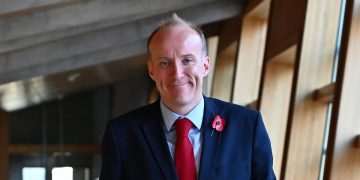
Tony Kirk thought his loss of balance may have been down to his time in the army, but it was something far more serious(Image: Cardiff and Vale Health Board)
A retired army major who found himself unable to walk in a straight line initially blamed decades of military service, but the real cause proved far more serious.
Tony Kirk, from Barry, had spent 35 years in the Armed Forces and assumed his unsteady balance was the result of a “broken body” after years of physical strain. His symptoms were later diagnosed as Parkinson’s disease – a moment that would fundamentally change his life.
Five years on from that diagnosis, Tony – now aged 69 – admitted that while he had been aware Parkinson’s was a possibility, it was not something he had seriously considered.
“It’s only since being diagnosed that I armed myself with some information and knowledge about what it is,” he said.
He is now speaking out about his experience, determined to show other Parkinson’s patients that support is there when you need it.
It is the same level of determination that Tony has shown throughout his life.
After leaving school at 15, Tony joined the Army, completing a three-year apprenticeship as an aircraft helicopter engineer.
Over a 35-year career, he continued his education, earning a degree in aerospace engineering and a masters in education.
By the time he retired at 50, he had reached the rank of Major, worked as a training consultant and contributed to the peace settlement in Bosnia. He later spent a decade delivering military training for Boeing.
It was five years after retiring that subtle symptoms began to emerge. Alongside problems with balance, Tony lost his sense of smell – a common early sign of Parkinson’s – though he initially attributed it to a previous nose operation.
In Wales, around 8,600 people are living with Parkinson’s, a progressive neurological condition that affects both movement and mental wellbeing.
Symptoms can include tremor, muscle stiffness and slowed movement, as well as anxiety, depression and loss of smell.
For Tony, the diagnosis came as a shock, particularly after already facing serious health challenges.
“I’d already gone through prostate cancer and a heart attack,” he said. “I’m thinking, ‘what else is life going to throw at me?’ It was quite a challenging time, both for me and my wife, Chris.”
In the months that followed, he struggled to come to terms with what the condition would mean for his future.
“Whilst it wasn’t a terminal diagnosis, it was limiting and would affect my quality of life,” he said. “I’d been used to a very physical, able life… and I could see that being eroded.”
He described experiencing “dark thoughts” and a sense of losing parts of his identity. Stay informed on the latest health news by signing up to our newsletter here
Support came through a clinical psychologist within the Parkinson’s Service at Cardiff and Vale University Health Board – one of only a small number of services in the UK to embed specialist psychological care within its Parkinson’s team.
“Jointly, we decided she might be able to help me. And she has significantly,” Tony said. Through regular sessions, he began to reframe his outlook and develop new ways of coping.
“The sessions have given me a safe space to talk about my worries and emotions,” he said, adding that he had learned to “let go of some of my old ways of thinking, which were good and appropriate in a different life, but not in the life I have now.”
Tony now describes Parkinson’s as an “anti-social neighbour” he is learning to live with.
“The sessions with the psychologist have helped me transition and come to an acceptance of my noisy neighbour. I can now say I’ve got Parkinson’s, it will limit me, but I’m going to do what I need to do today and be thankful for the things I still can do””
He has focused on adapting, finding “workarounds” that allow him to continue achieving his goals.
One of the most significant changes has been learning self-compassion. “In the Army there was little compassion,” Tony said. “I’ve learned to say to myself, ‘it’s okay. Stop. You don’t have to win.'”
Now, he is using his experience to support others, speaking to trainee psychologists about living with the condition.
“I go in and give them a day in the life of a person with Parkinson’s,” he said.
“That is therapy for me… it makes me feel like I’m still contributing. And that’s been an important part of my life, the ability to touch other people’s lives as an educator, as a trainer.”

