
















































18 years ago, a nine-page document introduced the idea that would give birth to the world’s largest crypto asset. The document is white paper Bitcoins the work of a mysterious figure named Satoshi Nakamoto.
Exactly on October 31, 2026, Bitcoin Whitepaper Day commemorated again. This moment makes us remember the journey of BTC, from just an electronic money concept to developing into a global asset worth trillions of dollars.
When Satoshi Introduced the Idea of Bitcoin
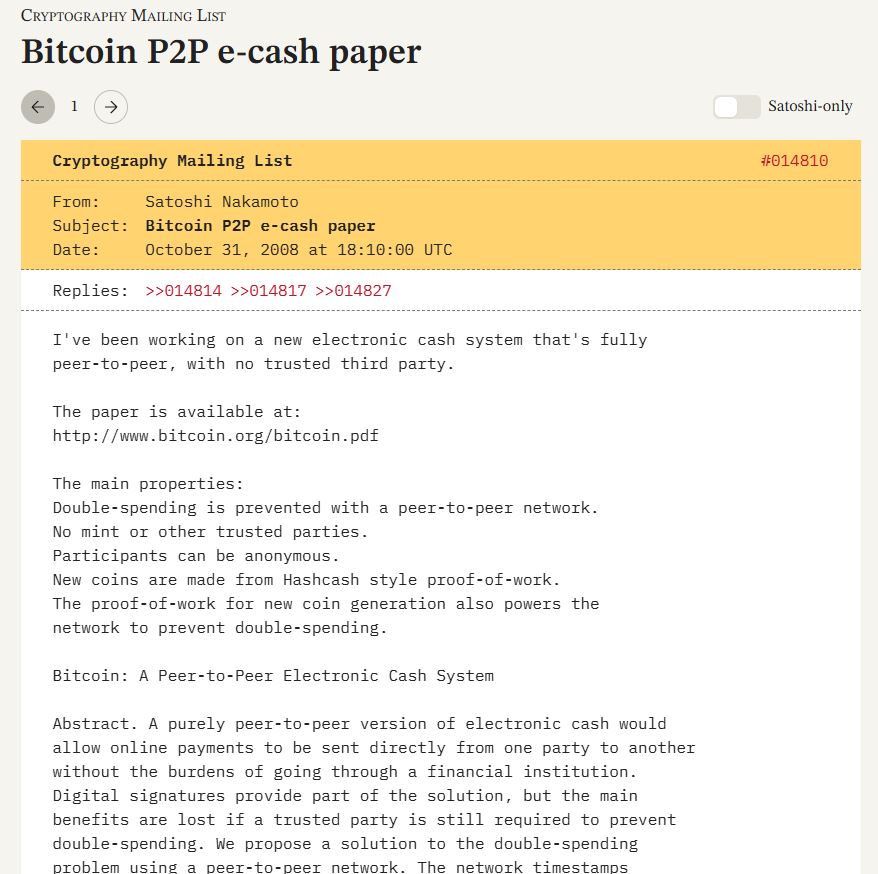
Bitcoin’s journey began on October 31 2008. At that time, Satoshi Nakamoto send an email to Cryptography Mailing List to introduce a new electronic money system that does not depend on intermediaries.
“I’m working on a completely new electronic cash system peer-to-peerwithout a trusted third party,” Satoshi wrote in the email.
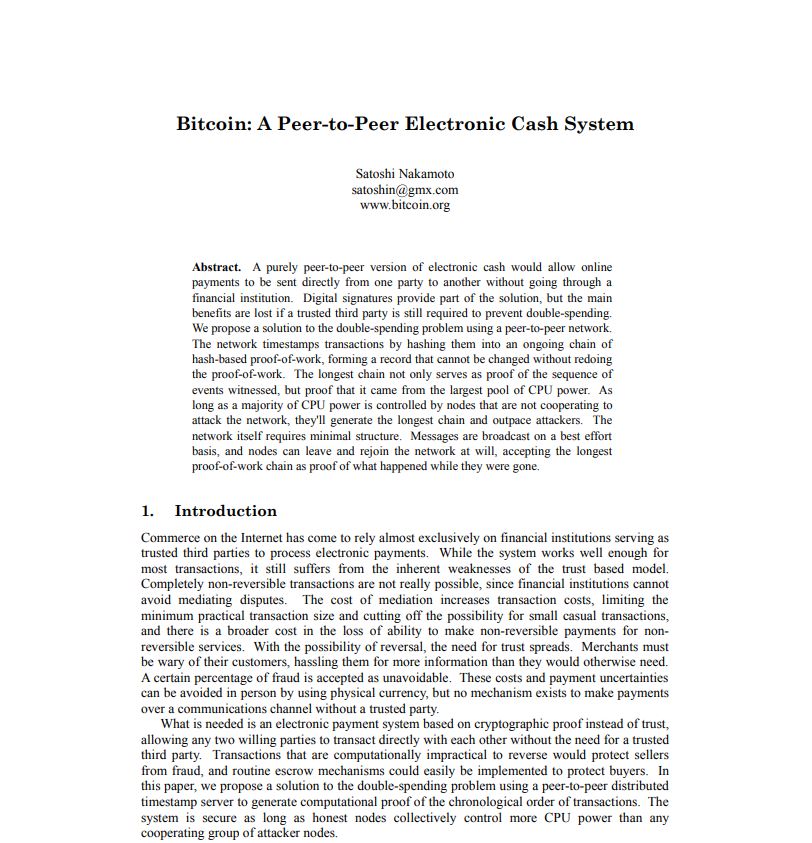
Along with the short message, Satoshi included white paper entitled Bitcoin: A Peer-to-Peer Electronic Cash System. The document explains how electronic payments can take place without a financial institution.
Simple idea. Digital financial systems usually require a trusted party to verify transactions and prevent the same money from being used more than once or double-spending.
Satoshi offers a different approach. Transactions are announced over the network peer-to-peerthen recorded using timestamp and secured via chain proof-of-workso that network participants can agree on a single transaction history.
This concept was then realized on January 3, 2009 when Satoshi mined Genesis Blocks or Block 0, marking the start Bitcoin blockchain that actually operates.
ADVERTISEMENT

A few days later, on January 8, 2009, Satoshi announced Bitcoin version 0.1. Software open-source This allows users to run nodes and start participating directly in the Bitcoin network.
The Nine Pages that Form the Basis of the Bitcoin Network
Whitepaper Bitcoin is actually not that long. In nine pages, Satoshi discusses transactions, server timestamp, proof-of-worknetwork, incentives for nodes, storage simplification to network security.
One of his most important ideas was to eliminate the need for central authority. There is no single bank, company or server in charge of determining which transactions are valid Bitcoin network.
Instead, the network uses proof-of-work. Nodes expends computing power to form blocks, while the chain with the largest accumulated work becomes the network’s accepted representation of transaction history.
Satoshi also designed the incentive mechanism. Nodes that create blocks acquire new BTC, creating a way to distribute coins without the need for a central institution in charge of issuing currency.
The number of Bitcoins itself is ultimately limited to a maximum of 21 million BTC. Block rewards are reduced periodically through a mechanism halvingmaking the rate of new BTC issuance lower as time goes by.
From that foundation, Bitcoin evolved far beyond experimentation. The network survived without Satoshi, which slowly disappeared from the public eye in 2010, while its community of developers and users continued to grow.
From Almost Worthless to Reaching US$100 Thousand
Bitcoin’s price ride has been even wilder. At the beginning of its existence, BTC did not yet have a market price because it was only exchanged by a handful of users experimenting with this new technology.
In 2010, Bitcoin price still in the cents on the dollar range. The following year, BTC reached parity with the US dollar and briefly touched around US$30 before falling again sharply.
The price of BTC then passed US$1,000 in 2013. Four years later, a new wave of adoption brought Bitcoin close to US$20,000 at its peak. bull market 2017.
The next cycle took on a much larger scale. Bitcoin surpassed US$60,000 in 2021, before facing another long bear market throughout 2022.
Another key point comes in January 2024, when US regulators approve trading in a number of products Bitcoin Spot ETF. This instrument opens up a new path for traditional investors to gain exposure to BTC.
Bitcoin finally broke US$100,000 for the first time on December 5, 2024. Its journey continued until it reached a record high of around US$126,198 on October 6, 2025.
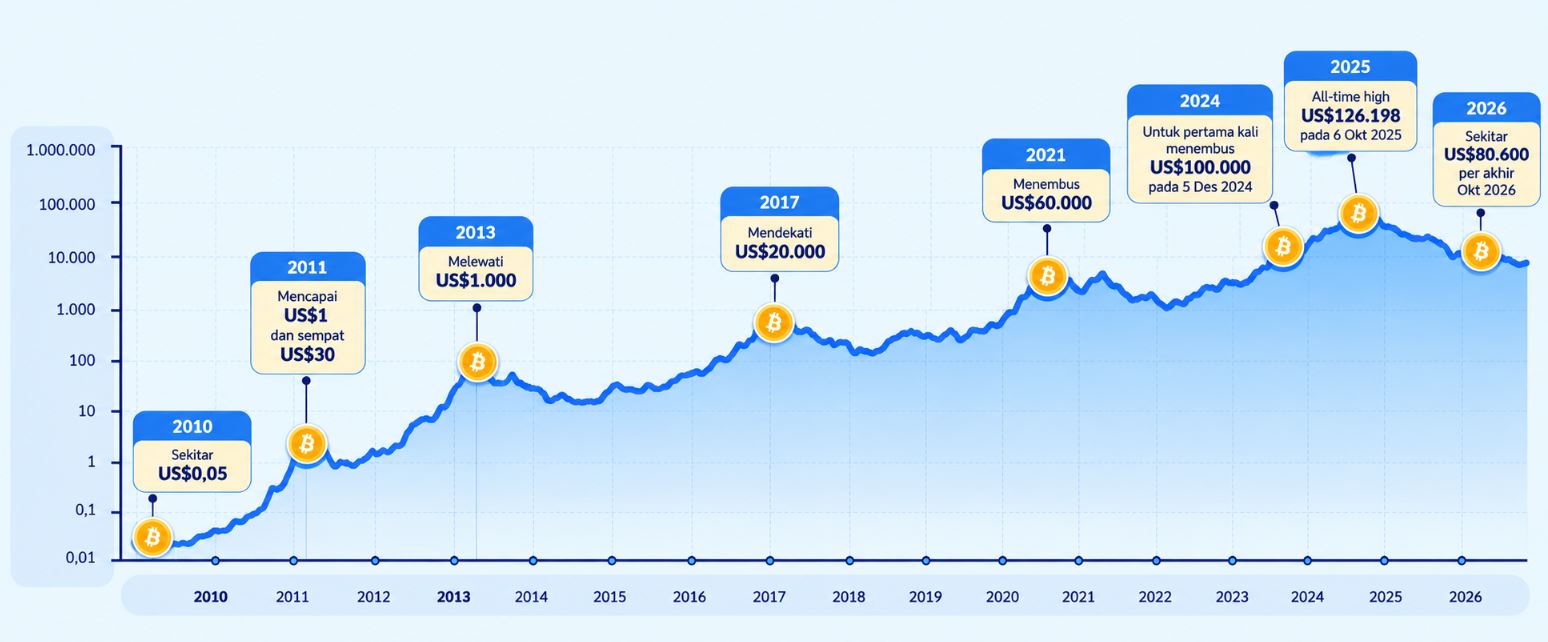
Entering Bitcoin Whitepaper Day 2026the journey has lasted 18 years. BTC is no longer an experiment without a price, but an asset with market capitalization which has reached a scale of trillions of dollars.
18 Years Later, Satoshi’s Idea Is Still Alive
Bitcoin’s changes over nearly two decades have certainly been enormous. Its use is now unlimited as a means of payment peer-to-peer as depicted in the original title white paper Satoshi.
Bitcoin has developed into an investment asset, a store of value and an instrument that can be accessed through ETFs. The US even formed Strategic Bitcoin Reserve in 2025 to manage government-owned BTC as a reserve asset.
However, the foundations that made these developments possible are still rooted in documents published 18 years ago, starting from open networks, proof-of-workto the ability to send value without relying on intermediaries.
Bitcoin Whitepaper Day not just an ordinary birthday celebration. October 31st serves as a reminder of the point when Satoshi first introduced an idea that would later develop far beyond its initial nine pages.
That’s the summary crypto news today which you can watch to keep up with world developments digital assets And blockchain technology. Stay tuned Blockchain Media Indonesia For updates the latest about the crypto market, Bitcoin news, and even study guides crypto for those of you who are still beginners. [dp]
Disclaimer: Content in Blockchainmedia.id is informational only, not investment or legal advice. All financial decisions are the sole responsibility of the reader.

