
























The project’s supporters say a rail link would make it easier for holidaymakers and provide an economic boost for Glasgow.

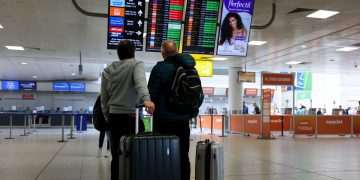
Glasgow Airport (Image: Daily Record)
Anas Sarwar will revive plans for a Glasgow airport rail link if he becomes Scotland’s next First Minister.
The Scottish Labour leader will commit to the ambitious project at an event in Paisley today.
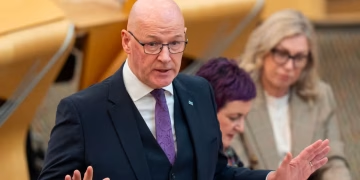
John Swinney, as Finance Secretary in Alex Salmond’s SNP Government, scrapped the £400m plan to connect Glasgow Central station and the city airport in 2009.
The move angered business leaders who believed a direct rail link would boost economic growth in Glasgow and the wider region.
In his Daily Record column, Sarwar said an incoming Scottish Labour Government would bring back the project.
He wrote: “It’s no secret that I think Glasgow is the best city in the world – but my biases aside, it is a fact Glasgow is a world-class city.
“We have hosted major international events and attract tourists from across the globe.
“That’s why it is so baffling that Glasgow remains one of the few major cities in Europe without a direct rail link to its airport.”

“Planning was underway for a Glasgow airport rail link decades ago – but back in 2009 then-Finance Secretary John Swinney scrapped the plans.”
He added: “A rail link will not only make life easier for Scottish holidaymakers, but it will unlock economic opportunities for the whole country.
“A Scottish Labour government under my leadership would back the development of a rail link once and for all, ending the delay and wasteful spending of the SNP.”
Under the current £1.1bn Glasgow and Clyde Valley City Deal, a tram-train link between the city centre and the airport is being considered as an option.
But the plans are at an early stage and Sarwar said he would deliver the rail link.
In 2009, Swinney said of the cancellation of the Glasgow airport rail link (GARL): “Essentially, the judgment that I arrived at was whether I thought that GARL was essential or desirable.
“I came to the conclusion that it was a desirable rather than essential project and it was therefore one that could be removed from the capital programme.”