














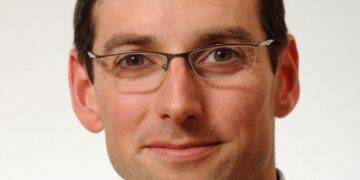

































The threat to crypto security has always been synonymous with quantum computers. However, renowned researcher at the Ethereum Foundation, Justin Drake, sees another risk that may move much faster, namely A.I.
He even asked for industry blockchain began considering “bunker mode,” a defensive measure to protect assets before AI mathematical capabilities advance far enough to shake the foundations of modern cryptography.
AI Begins to Change the Crypto Threat Map
In the upload at X on Wednesday (07/10/2026), Drake called for calm “bunker fashion” preparations. He suggested a controlled migration of assets to new addresses public keyit has never been exposed.
According to him, large asset owners and institutions should be the first groups to consider this step. Funds can be moved to addresses that have not previously signed a transaction.
The reason is a series. Drake thinks it makes sense to prepare for the possibility that ECDSA could be breached before Q-Day, the term for the point when quantum computers are able to threaten modern cryptography.
In the worst case scenario, he imagined private key can be recovered from public key quickly using available hardware, such as a large GPU cluster, in about a week.
Even though it is worrying, Drake is not asking crypto holders to panic. He actually emphasized that a hasty move could cause greater losses than the threat he was trying to anticipate.
ADVERTISEMENT

“Don’t rush. Although I’m sure there are reasons to act, hasty migration will actually cause more harm. Don’t panic either,” said Drake.
AI’s Mathematical Leap Makes Cryptographic Risks Even More Serious
These worries don’t just come from nowhere. Drake highlighted the acceleration of AI capabilities in mathematics after a number of old assumptions and issues began to be shaken by new findings in recent months.
One of the triggers is latest release OpenAI on Tuesday (06/10/2026). The company published hundreds of mathematical manuscripts of internal models working on a variety of difficult and open problems.
For Drake, these developments suggest that human intuition about mathematical abilities may need to be reexamined. Problems that have been considered very difficult for decades are now starting to get a new approach.
He even saw the possibility that a breakthrough on ECDSA would not have to wait quantum computer. New classical algorithms, if discovered with the help of AI, could be a faster path to threats.
Drake thinks the change is big enough to change the way the industry views cryptographic risks. According to him, the next few weeks even have the potential to bring an acceleration in mathematical progress that was difficult to imagine before.
“We are about to enter the weeks when centuries of mathematical progress have occurred in a short time. Are our 64-byte ECDSA signatures actually too good to be true?” Drake wrote.
The warning is important because Drake is not an unfamiliar figure on Ethereum. He is an EF researcher who has long been involved in protocol design, scalability, cryptography, and post-security strategy quantum.
Ethereum Begins to Prepare for the Era Post-AI
Drake’s defensive ideas have actually been in line with Ethereum’s recent direction. Through lean Ethereumhe previously pushed based cryptography hash as a foundation for long-term security.
EF has also strengthened post-quantum security research. The focus includes a variety of new approaches designed to reduce reliance on mathematical assumptions that are considered more vulnerable to breakthroughs.
However, Drake’s warning took the matter one step further. According to him, it is not enough for the industry to just think post-quantum cryptographybut also need to envision security for the era post-AI.
He tends to choose cryptography based hash like the SHA or BLAKE families because of the minimal algebraic structure. This approach is considered more resistant to the possibility of the emergence of new, very aggressive mathematical techniques.
Adam Back’s new statement makes a splash about Bitcoin’s quantum threat
Drake also encouraged big players such as Binance, Bitbank, Robinhood, Bitfinex and Tether to start strengthening cold storage them and review the method public key used.
According to him, this protective step should be taken before a threat appears, not when a loophole has been found. He also pushed to accelerate Ethereum’s defense schedule against new cryptographic risks.
“This schedule now needs to be reviewed and accelerated along with the emergence of super intelligence in the field of mathematics. I will encourage accelerated defense as much as possible,” said Drake.
The crypto world has been busy waiting for when Q-Day arrive. Now, the question that arises is even closer, what if mathematical breakthroughs come before quantum computers?
That’s the summary crypto news today which you can watch to keep up with world developments digital assets and blockchain technology. Stay tuned Blockchain Media Indonesia For updates Latest about the crypto market, news Bitcoinsto study guides crypto for those of you who are still beginners. [dp]
Disclaimer: Content in Blockchainmedia.id is informational only, not investment or legal advice. All financial decisions are the sole responsibility of the reader.

