
































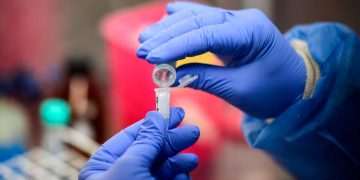








Health experts are currently tracking the latest variant which has remained “underground” since it was first detected back in 2024.

Health experts have warned about a new variant that is rapidly spreading worldwide(Image: RONALDO SCHEMIDT/AFP via Getty Images)
A new strain of Covid-19 has been identified by health experts, with cases being reported worldwide. The new strain dubbed the ‘cicada’ variant has been identified in 23 countries since being first detected in South Africa in November 2024.
The variant, officially known as BA.3.2, began spreading more widely in 2025, according to the Centers for Disease Control and Prevention (CDC). It has also been identified in over 25 US states and is currently being tracked the the World Health Organisation (WHO).
The CDC warned that cicada marks a “new lineage” of a “highly divergent” strain of the virus, as it has found to be genetically unique to previous strains. The latest strain, which now accounts for 30 percent of European Covid-19 cases, gets its nickname from a species of insects that are known to stay hidden with the strain keeping a low profile until it began to spread more rapidly.
Symptoms so far remain similar to previous strains and there is no evidence to suggest it makes people sicker. The CDC does highlight that true figures of cicada are likely underestimated due to under reporting and testing.
Dr. Robery H. Hopkins Jr., a medical director of the National Foundation for Infectious Diseases, said: “It is possible we will see Cicada drive a summer Covid surge and become the dominant strain in the United States, but that is by no means certain.”
Multiple strains of Covid-19 have developed since its first inception, with new variants resistant to treatments continuing to emerge. This is down to a mutation of spike protein, which can impact transmission and immune evasion, the CDC reports.
Following its initial detection, cicada wasn’t reported again until March 17, 2025 in Mozambique, then again in the Netherlands on April 12, followed by Germany on April 29, 2025. This new lineage didn’t fully begin until September 2025, with the highest number of detections noted during the week of December 7.
Since then, it has been detected in the United States in travellers returning from Japan, Kenya, the Netherlands and the UK, as of February 11, 2026. According to the latest UKHSA data, cases of Covid-19 cases have risen by 4.9 percent, with the reports increasing to 496 from 473 up to the week of March 18, 2026.
It further reports that deaths have risen by three, bringing the total up to 26 as of March 13, 2026. It is not confirmed if cicada has contributed to this, or if these figures stem from other variants.
In addition, the strain has also been found in airline and wastewater samples across 25 states, including New York and New Jersey.
Common symptoms of cicada, which are similar to most Covid-19 cases, include cough, fever or chills, sore throat, congestion, shortness of breath, fatigue, headache, loss of smell or taste, and gastrointestinal issues, the Mirror reports.
Symptoms can vary and may resolve with rest, hydration, and over-the-counter medications. The variant can also cause asymptomatic infections, meaning some people won’t feel sick but can still spread the virus.
If you think you have Covid-19, the CDC advises you to stay home, avoid contact with others and wearing a sturdy, high quality mask if you need to come into contact with people. Rest and hydration is the main focus, with pain to be treated with over the counter medications.
People should only seek emergency care if severe symptoms like difficulty breathing, chest pains, confusion, or blue lips and skin are experienced.
Although BA.3.2 has many spike protein mutations that could reduce immunity, experts emphasise that vaccines still provide protection, especially against severe disease.
“It’s not completely clear how effective the current vaccine will be, but it likely still has some effectiveness,” said Dr. Adolfo García-Sastre, director of the Global Health and Emerging Pathogens Institute at Mt. Sinai.

