













































Dr Chris Provan described Swinney’s flagship scheme as “an unfortunate distraction”.

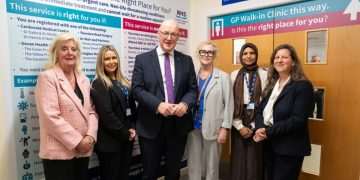
John Swinney opening a new GP walk-in centre in Glasgow
A flagship SNP election pledge to open a string of GP walk-in centres was driven by “politics over practicality”, a senior doctors’ chief has claimed in a damning intervention.
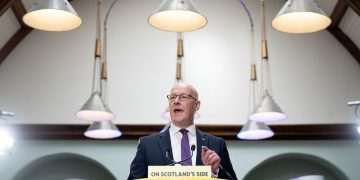
John Swinney used the Nationalist party conference in Aberdeen last year to announce a policy he insisted would help end the “8am rush” Scots face when booking an appointment with their doctor.
But Dr Iain Morrison, chair of the BMA’s Scottish GPs committee, criticised the policy as figures showed fewer than 7,000 patients had used the pilot service since it launched last year.
The top medic suggested the scheme had been expanded due to favourable polling, saying evidence showed walk-in centres did not work.
“Our initial concerns that we raised when they first announced this pilot remain, and unfortunately, it does look like a case of, we told you so,” he said.
“We knew from extensive evidence from the English walk-in centre network that they failed to alleviate any pressure on existing GP services or A&E departments, yet they cost a considerable amount of money.”
Dr Morrison said the Scottish Government went ahead with the scheme despite criticism from medical professionals.
He said: “They (walk-in centres) were initially announced at the SNP conference pre-election. They then very quickly became a government policy.
“The 15 then became 30 with no consultation. I can only assume that it was polling quite well in the lead-up to the election, and that’s why there was this further investment despite the huge swathes of the profession and even within the health board network, having major concerns about the development.”
Asked if it was a case of “politics over practicality”, the doctor said: “That’s how it would appear.”
The GP said the Scottish Government should invest more money into core NHS services, rather than “into separate services that fail to alleviate the core problem”.
He said he was concerned ministers would not shut down the GP walk-in scheme when “all the evidence suggests it is not working”.
“It’s going to continue to be worked upon, potentially expanded, despite the evidence crying out that it is not having the impact that is desired,” he added.
Figures from Public Health Scotland show 6,792 visits were recorded across the pilot walk-in centres between February and the end of June.
The six centres that were open for the entire month of June recorded 2,156 visits.
Wester Hailes in Edinburgh, the first clinic to open in February, recorded 846 cases in June, while Stranraer had 732. Hawick saw 178 cases, Lerwick 222, Lochee 94 and Benbecula 84.
Public Health Scotland says direct comparisons should not be made because centres have different opening dates, opening hours and eligibility criteria.
The Health Secretary defended the programme, describing it as an “innovative pilot”.
Angela Constance said: “It’s really important to stress two things: we made a commitment to end the 8am rush for GP appointments because we heard loudly and clearly people’s frustration with that 8am rush, and I would contend that the patient’s voice counts very clearly.
“But also to reassure GPs the length and breadth of Scotland that this is to complement our investment and our work to support and strengthen GP practices.”
Asked if she accepted that some of the walk-in centres were being underused, Constance said the programme would be “robustly evaluated” by Healthcare Improvement Scotland.
Dr Chris Provan, chairman of the Royal College of GPs Scotland, described the scheme as “an unfortunate distraction”.
He added: “Today’s figures reinforce our long-held view: GP walk-in centres will not meaningfully increase the capacity of general practice to meet the needs of the population.
“The data shows that the six GP walk-in centres that were fully operational in June delivered approximately 70 patient contacts per day.
“GPs and their teams across Scotland provide around 136,000 patient contacts every weekday.
“While the Scottish Government presents walk-in centres as a solution to difficulties in accessing GP appointments, today’s figures demonstrate their contribution to addressing the capacity challenges facing general practice is minimal.”

